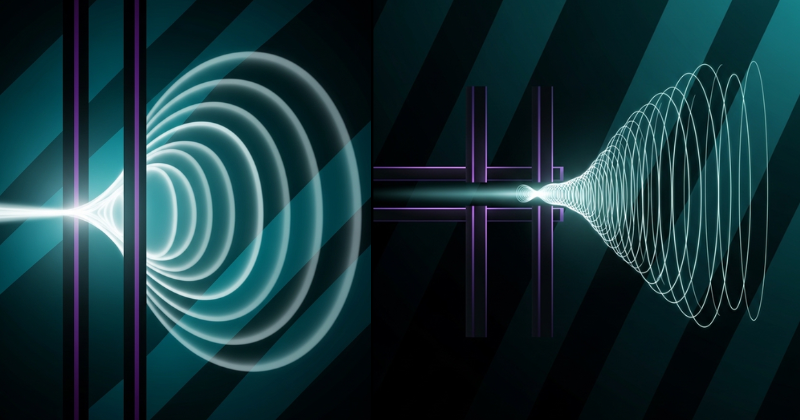
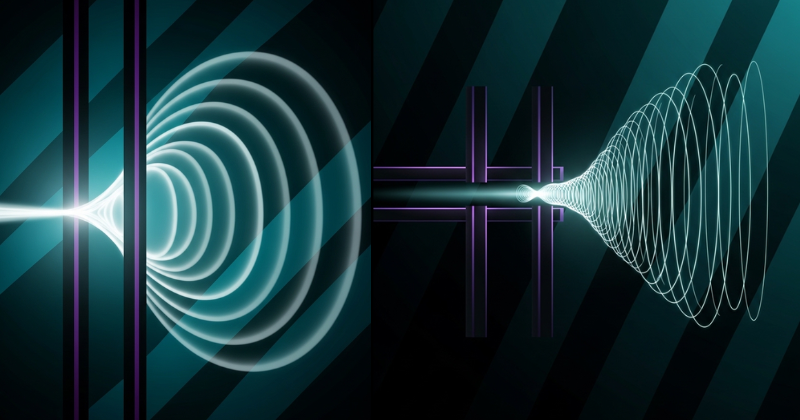
Researchers have constructed an experimental quantum universe using two entangled systems—microscopic magnets functioning as a Clock and a vibrating oscillator serving as the World—to investigate how time emerges from quantum mechanics. This groundbreaking setup addresses the fundamental “problem of time” in quantum gravity, demonstrating that temporal evolution can arise from quantum correlations between subsystems rather than existing as an external parameter, providing empirical evidence for theoretical frameworks where time itself is not fundamental but emergent from deeper quantum relationships.
The Problem of Time in Quantum Mechanics
Quantum mechanics and general relativity—the two pillars of modern physics—possess fundamentally incompatible concepts of time. In quantum mechanics, time serves as an external parameter against which quantum states evolve according to the Schrödinger equation. The wavefunction ψ(t) depends explicitly on time t, which flows uniformly and independently of physical processes. Measurements occur at definite times, and temporal ordering of events remains absolute within reference frames.
Conversely, general relativity treats time as part of the dynamic spacetime fabric that curves in response to matter and energy. There exists no universal time coordinate; different observers experience different temporal flows depending on their motion and gravitational environment. When attempting to quantize gravity—merging quantum mechanics with general relativity into a theory of quantum gravity—this incompatibility creates profound conceptual difficulties known collectively as the “problem of time.”
The Wheeler-DeWitt equation, which attempts to describe quantum cosmology, contains no time parameter whatsoever. The universe’s quantum state satisfies a timeless constraint equation, raising the question: if the universe as a whole experiences no time, how does temporal evolution emerge in our observations? This paradox has driven decades of theoretical investigation into relational and emergent time concepts.
The Page-Wootters Mechanism: Time From Entanglement
Theoretical Framework
In 1983, physicists Don Page and William Wootters proposed a radical solution: time could be relational rather than absolute, emerging from quantum entanglement between a “clock” subsystem and the rest of the universe. In their framework, the total system (clock plus world) exists in a timeless, static superposition state. However, when one subsystem (the clock) is measured, quantum correlations with the other subsystem (the world) create the appearance of temporal evolution.
Mathematically, the Page-Wootters mechanism constructs a global state |Ψ⟩ satisfying a timeless constraint analogous to the Wheeler-DeWitt equation. This state exhibits strong entanglement between clock and world subsystems. When an observer measures the clock state and finds it indicating time t, the quantum correlations determine the corresponding conditional state of the world, which appears to have evolved to time t. Time emerges as a correlation parameter between entangled subsystems rather than an external backdrop.
Conditional Dynamics and Emergent Evolution
The crucial insight involves conditional probabilities. Although the global state |Ψ⟩ remains static and timeless, the conditional state of the world given a particular clock reading exhibits dynamics. As clock readings progress, the correlated world states trace out evolution matching what standard quantum mechanics predicts with external time. The dynamics appear real to observers within the system even though no evolution occurs at the global level.
This mechanism requires specific entanglement structures. The clock must possess sufficiently many distinguishable states spanning the relevant temporal range. Entanglement between clock and world must encode the world’s Hamiltonian evolution. When these conditions hold, the Page-Wootters formalism reproduces standard quantum mechanics for subsystems while remaining compatible with timeless quantum cosmology for the universe as a whole.
Experimental Implementation: Building a Quantum Universe
Physical System Architecture
The recent experimental realization of the Page-Wootters mechanism employed a nitrogen-vacancy (NV) center in diamond—a quantum system where a nitrogen atom substitutes for a carbon atom adjacent to a vacancy in the diamond lattice. This defect creates an electronic spin-1 system with exceptionally long quantum coherence times, making it ideal for precision quantum experiments. The NV center’s electronic spin served as the World subsystem.
The Clock subsystem consisted of the nitrogen nuclear spin—a spin-1 quantum system providing three distinguishable states corresponding to different temporal moments. Researchers engineered quantum entanglement between electronic and nuclear spins through carefully designed electromagnetic pulse sequences, creating the correlated timeless state required by Page-Wootters theory. The experimental setup operated at room temperature using optically detected magnetic resonance techniques to initialize, manipulate, and measure quantum states.
Generating the Timeless Entangled State
Creating the appropriate entangled state required precision quantum control. Researchers applied microwave and radiofrequency pulses to rotate spin states, create superpositions, and generate entanglement. The protocol constructed a state where each nuclear spin (clock) configuration correlated with a specific electronic spin (world) state, with correlations encoding the world’s Hamiltonian dynamics.
Specifically, the global state took the form |Ψ⟩ = Σ_t |t⟩_clock ⊗ |ψ(t)⟩_world, where |t⟩ represents clock states and |ψ(t)⟩ represents the world evolved to time t under its Hamiltonian. This superposition encompasses all temporal moments simultaneously, satisfying a constraint equation analogous to the Wheeler-DeWitt equation for this miniature universe. The challenge involved engineering Hamiltonian interactions producing precisely this entanglement structure.
Experimental Results and Time Emergence
Demonstrating Conditional Dynamics
The experimental validation involved measuring the clock subsystem to project it onto a definite time state, then characterizing the resulting conditional state of the world subsystem through quantum state tomography. Researchers repeated this protocol for different clock measurements, reconstructing how the world’s conditional state varied with clock readings. If the Page-Wootters mechanism operates correctly, these conditional states should exhibit evolution matching standard Schrödinger dynamics.
Results confirmed this prediction with remarkable precision. The world’s conditional state evolved according to its Hamiltonian as clock readings advanced, reproducing the expected quantum dynamics despite the global state remaining static. Fidelities between observed conditional states and theoretically predicted evolved states exceeded 96%, demonstrating that temporal evolution successfully emerged from timeless quantum correlations.
Quantifying Entanglement and Temporal Resolution
The quality of emergent time depends critically on entanglement strength between clock and world. Researchers quantified entanglement using concurrence—a measure ranging from zero (no entanglement) to one (maximal entanglement). The experimental system achieved concurrence values around 0.85, indicating strong quantum correlations sufficient to support well-defined emergent dynamics.
Temporal resolution—how precisely the clock distinguishes different times—also impacts emergent time quality. With three clock states, the system effectively divided the temporal evolution into three discrete moments. Finer temporal resolution would require clock subsystems with more distinguishable states, a direction for future experiments. The discrete clock produced step-wise rather than continuous evolution, yet still captured the essential dynamics demonstrating the emergent time principle.
Theoretical Implications for Quantum Gravity
Resolving the Problem of Time
This experimental demonstration provides empirical support for relational time approaches to quantum gravity. If time can emerge from entanglement in controlled laboratory systems, the same mechanism might operate cosmologically, resolving how temporal evolution appears in timeless quantum gravity theories. The universe as a whole might exist in a static superposition satisfying the Wheeler-DeWitt equation, with time emerging relationally for subsystems including observers.
This perspective shifts the conceptual framework from seeking an absolute time coordinate compatible with both quantum mechanics and general relativity to understanding time as an effective description arising from quantum correlations. The problem of time transitions from a fundamental incompatibility to a question about emergence mechanisms—how does the timeless quantum universe give rise to our temporal experience?
Connection to Quantum Cosmology
In quantum cosmology, the Page-Wootters mechanism suggests that universe-scale clocks (perhaps gravitational degrees of freedom or matter field configurations) become entangled with local quantum systems, generating emergent temporal evolution for those systems. Different observers with different clock subsystems might experience different emergent times, potentially explaining time dilation and relativity of simultaneity from quantum foundations.
Furthermore, if the universe began in a quantum superposition of all possible spacetime geometries, the measurement-like process of decoherence through environmental interaction could select particular geometric histories, creating the appearance of classical spacetime evolution. The experimental demonstration shows how such emergence operates in principle, supporting theoretical cosmology programs based on timeless quantum states.
Broader Quantum Foundations Ramifications
Measurement and Observer Role
The Page-Wootters framework intrinsically involves measurement and conditional states, raising questions about observer role in quantum mechanics. When an observer measures the clock, collapsing it to a definite time, the world simultaneously collapses to the corresponding evolved state. This process requires treating measurement as a real physical process producing definite outcomes rather than merely updating knowledge.
Different interpretations of quantum mechanics handle this differently. In Copenhagen interpretation, measurement remains a primitive concept requiring observers external to the quantum system. In many-worlds interpretation, the observer becomes part of the entangled system, experiencing one branch of the superposition while other branches realize different clock readings and world states. The experimental results are interpretation-neutral but emphasize measurement’s central role in emergent time.
Decoherence and Classical Time Emergence
While the experiment demonstrates emergent time in purely quantum systems maintaining coherence, our everyday experience involves classical time in decohered environments. Decoherence—the process where quantum systems lose coherence through environmental interactions—likely plays a crucial role in explaining how quantum emergent time becomes the robust classical time of macroscopic experience.
Environmental monitoring effectively constitutes continuous measurement of clock degrees of freedom, selecting particular time basis states and suppressing quantum superpositions of different times. This decoherence mechanism could explain why we experience definite time flow rather than quantum superpositions of temporal evolution. Future experiments incorporating controlled decoherence could illuminate the quantum-to-classical transition for emergent time.
Experimental Challenges and Technical Achievements
Precision Quantum Control Requirements
Implementing the Page-Wootters mechanism required exceptional quantum control precision. Creating the specific entanglement structure encoding Hamiltonian dynamics demanded pulse sequences calibrated to better than 1% accuracy in rotation angles and timing. Small errors accumulate, degrading entanglement quality and reducing fidelity of emergent dynamics. Achieving 96% fidelity represented significant technical accomplishment given the experimental complexity.
Decoherence posed constant challenges. Even with NV centers’ relatively long coherence times (milliseconds to seconds), environmental noise gradually destroyed the carefully engineered quantum correlations. Experiments required completion within coherence timescales, limiting the temporal range of emergent evolution observable. Advanced techniques like dynamical decoupling—applying rapid pulse sequences to suppress environmental noise—extended coherence times sufficiently for experimental demonstration.
Quantum State Tomography Verification
Verifying emergent dynamics required complete characterization of world conditional states through quantum state tomography—a procedure reconstructing the full density matrix by measuring multiple complementary observables. For spin-1 systems, this involves at least six independent measurements per state. Statistical uncertainties from finite measurement repetitions and systematic errors from imperfect readout fidelity limit tomographic accuracy.
Researchers performed hundreds of measurement repetitions to achieve statistical significance, applying maximum likelihood estimation to reconstruct density matrices from measurement data. Uncertainty quantification through bootstrapping methods confirmed that observed dynamics significantly exceeded what random entangled states would produce, establishing genuine emergent temporal evolution rather than experimental artifacts.
Future Directions and Scaling Challenges
Larger Clock Hilbert Spaces
Current experiments employed three-state clocks providing minimal temporal resolution. Extending to higher-dimensional clock spaces would enable finer temporal discrimination and longer emergent evolution intervals. Potential physical implementations include multi-level atomic systems, photonic systems with time-bin encoding, or superconducting circuits with multiple energy levels.
However, larger Hilbert spaces increase experimental complexity. Creating precise entanglement across higher-dimensional systems requires more sophisticated pulse sequences, longer coherence times, and more extensive tomographic characterization. The scaling challenge parallels difficulties in quantum computing: maintaining coherent control as system size increases remains the central technical barrier.
Multiple Subsystems and Relational Dynamics
Natural extension involves multiple world subsystems entangled with shared clock systems, creating miniature universes with multiple interacting components all experiencing emergent time. Such systems could explore how relational dynamics operate when multiple observers with different clocks compare temporal measurements, potentially modeling relativistic time dilation effects from quantum foundations.
Implementing multi-party Page-Wootters scenarios requires engineering complex entanglement structures among three or more subsystems while maintaining sufficient coherence for dynamics observation. Recent theoretical work has outlined protocols for such implementations, suggesting experimental feasibility with current quantum technology platforms including trapped ions, superconducting qubits, and photonic systems.
Philosophical Dimensions of Emergent Time
Presentism Versus Eternalism
The Page-Wootters mechanism resonates with philosophical debates about time’s nature. Eternalism—the block universe view where past, present, and future all exist equally—aligns with the timeless global state containing all temporal moments in superposition. Yet the emergent relational dynamics support presentism for observers within the system, who experience only the present moment corresponding to their clock state.
This dual character suggests both philosophical positions capture partial truths about different levels of description. The fundamental quantum description is eternalist and timeless, while the emergent observable reality is presentist and temporal. Rather than conflicting metaphysical claims, these represent complementary perspectives on layered physical reality.
Free Will and Determinism in Timeless Quantum Worlds
If the universe exists as a timeless superposition with time emerging relationally, implications for free will and determinism become subtle. The global state is static and determined, suggesting determinism. Yet measurement outcomes determining clock states (and thus experienced temporal flow) involve quantum randomness, introducing fundamental indeterminism. Which clock reading an observer experiences—and thus which temporal world state they observe—remains quantum-mechanically random.
This framework suggests a middle position between classical determinism and free will. The space of possibilities (the global superposition) is determined, but which possibility actualizes for any observer involves irreducible quantum randomness. Whether this randomness constitutes genuine freedom remains philosophically contentious, but the experimental realization grounds these abstract debates in concrete physical implementations.
The experimental creation of a miniature quantum universe using entangled magnetic and oscillatory systems as clock and world successfully demonstrates the Page-Wootters mechanism, showing how temporal evolution can emerge from timeless quantum correlations between subsystems. This achievement provides empirical validation for relational time approaches addressing quantum gravity’s problem of time, suggesting that time itself is not fundamental but rather emerges from quantum entanglement patterns, much as spacetime geometry emerges in holographic principles. The observed conditional dynamics, achieving over 96% fidelity with predicted temporal evolution despite the global system remaining in a static timeless state, establishes proof-of-principle that our experience of flowing time could arise from quantum correlations in a fundamentally timeless quantum universe. As experimental techniques advance toward larger clock Hilbert spaces, multiple interacting subsystems, and controlled decoherence environments, we move closer to understanding the quantum origins of time itself—potentially resolving one of physics’ deepest conceptual challenges while illuminating profound connections between measurement, entanglement, emergence, and the nature of physical reality. This synthesis of precise quantum control with foundational theoretical physics exemplifies how laboratory experiments can now probe questions once confined to philosophical speculation, demonstrating that the abstract mathematics of quantum gravity and quantum cosmology makes concrete, testable predictions about the emergence of our most fundamental experience: the flow of time.